
Long Beach and the surrounding Nassau County area
Mold Removal in Long Beach and Nassau County, NY
Get the growth and the material holding it out of the building, in the order New York's licensing rules set, and get an independent clearance report at the end of it.
Mold Removal quote
Tell us what the growth is on, roughly how large the area is, and whether an assessor has already written a plan. That is enough for us to say which licensed step comes next.
Would you rather talk it through? Call (315) 640-3590, answered 24/7.
$100 off your first job
Credited by us on your first booked job.
- One credit per customer per property, on your first booked job.
- Valid through December 31, 2026.
Mention this offer when you book. Full terms.
What a removal actually consists of here
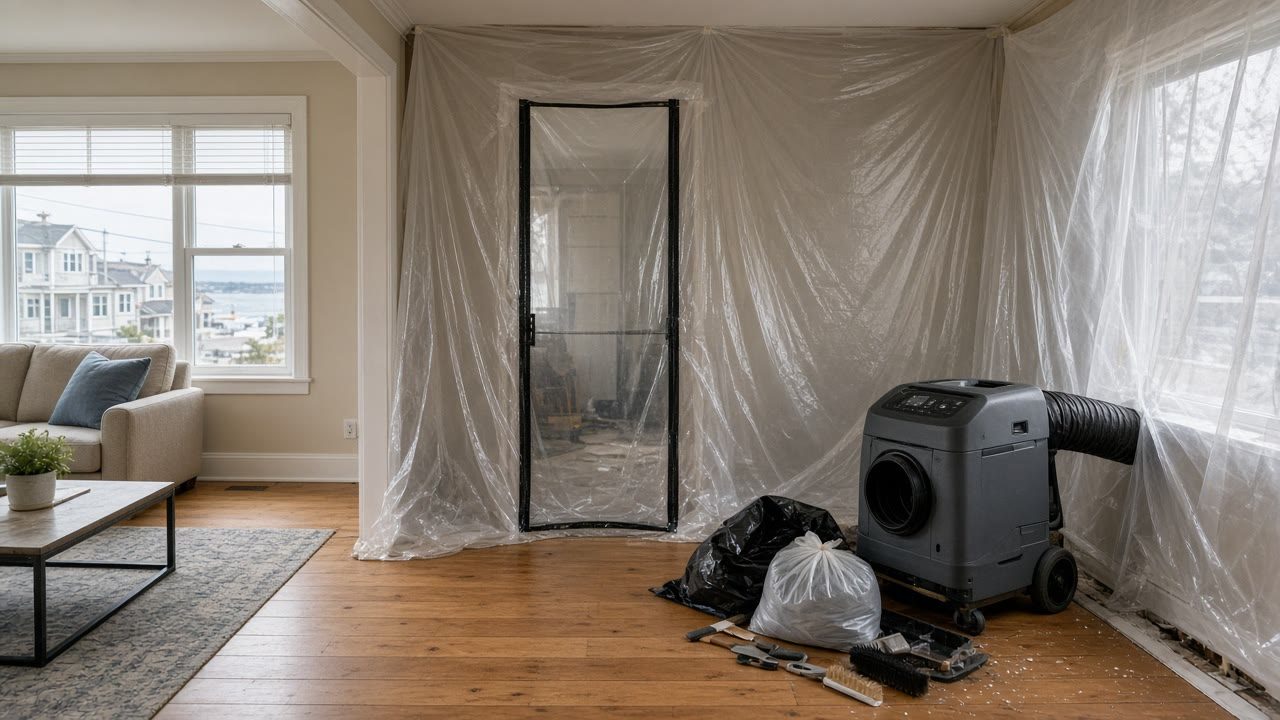
Removal is the half of the job where material leaves the house. A licensed remediation contractor works to the written plan the assessor produced: containment and air control first, then out with the porous material that cannot be cleaned and dried, then cleaning and drying of what can be saved, then final cleaning. The containment stays up until an independent assessor confirms in writing that clearance has been achieved. Remediation is the trade's word and the state's word for it; most people type mold removal, and they mean the same work. What tends to surprise Long Beach owners is where the volume comes from. Under an elevated house, most of what is worth paying to remove is the insulation, the finishes and the stored material, because the damp itself comes from openings the City's ordinance requires to stay there.
- Containment and negative air, so the work does not move growth into rooms that are currently fine
- Removal and disposal of porous material that cannot be cleaned and dried, including drywall, insulation, carpet, paper goods and ceiling tiles
- Cleaning and drying of framing, masonry and hard surfaces that can be kept
- Clearing out a crawl space or vented enclosure: stored material, finishes and the build-out that was never flood resistant
- Work on growth around heating and cooling equipment and ductwork in a damp lower space
- HEPA vacuuming and detail cleaning of the work area before clearance
- Use of disinfectants only where the plan calls for one, and only products registered with the EPA for that use
- Holding containment in place until the independent assessor issues the passed clearance report
- Black mold, so called, handled the same way as any other dark growth: by area, material and water source
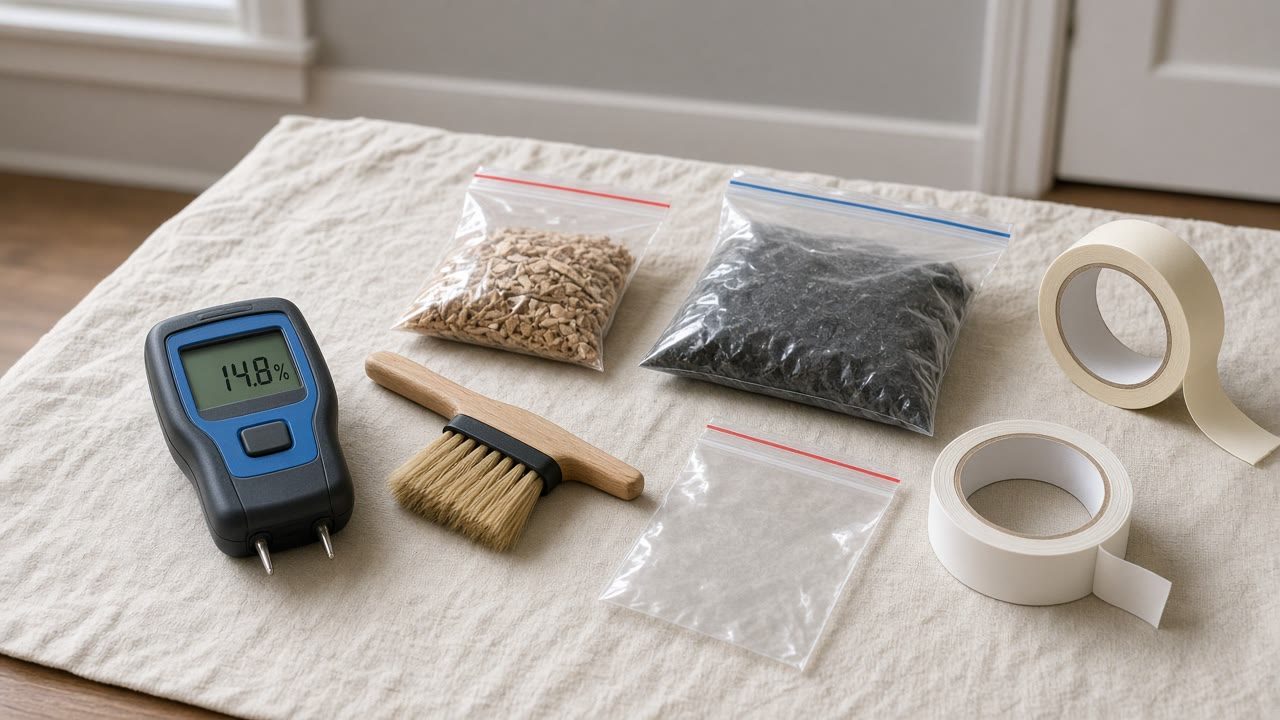
What changes the size of a removal job
A removal price is mostly a volume of material, not a square footage of stain. These are the things that change the volume.
How much porous material is discarded rather than cleaned
New York State Department of Health says porous materials with extensive growth should be discarded and that all wet materials which cannot be cleaned and dried thoroughly should be discarded. Bagging and hauling material is most of the labor in a typical job.
What was built out or stored below the base flood elevation
FEMA states insulation is not a flood resistant material, and lists appliances, heating and air conditioning equipment, ductwork, plumbing fixtures and non flood resistant materials as not allowed below the base flood elevation. Removing them is the job; putting them back is buying the job again.
Whether the damp space is a flood enclosure or an ordinary room
Long Beach requires a crawl space to be vented so hydrostatic forces equalize, and says an area sub grade on all sides counts as a basement and is not permitted. Where the openings are mandatory, the scope moves onto contents and finishes, because the air cannot be shut out.
Whether the building is occupied during the work
Occupancy sets the notification, the isolation and the sequence. A staged job in an occupied apartment building costs more days than the same square footage in an empty shore house.
Whether the heating and cooling system served the affected area
Ductwork that ran while a lower space was damp has carried spores into rooms that were never wet, and the plan widens to cover them.
How far the rebuild after removal goes
Long Beach defines substantial improvement as work costing fifty percent or more of the structure's market value before construction starts, which pulls the whole structure up to current flood standards. Get that determination from the City before committing to a large interior rebuild.
Who authorizes the work
New York exempts an owner, a managing agent or their full time employee working on a residential building of more than four dwelling units, provided they do not do the work commercially for the public. In a building with staff, the sequence a single family house has to follow may not apply.
The age of the material coming out
Older construction brings asbestos and lead paint into the question, and both carry separate licensing. In Lido Beach, 95.7 percent of housing units were built in 1979 or earlier, the highest pre-1980 share in this coverage area.
Already hold a written plan?
Send us what the assessor wrote. We will arrange a licensed remediation contractor to price and carry out that scope, not a different one.
The order the work has to happen in, and why
The written plan exists before anything is touched
The remediation contractor receives the plan before site preparation begins. New York's Department of Labor states the law does not allow a licensed remediator to work on a project without an assessment from a licensed assessor, even where the property owner provides a waiver.
Containment goes up and the air is put under control
Containment has to prevent the spread of mold outside it. This is the step homeowners most often see skipped by a cheap crew, and it is the step that decides whether the rest of the house stays clean.
Out with what cannot be saved
Porous material with extensive growth is cut out, bagged and removed. Under a house that usually means insulation, boxes and finishes rather than structure, since FEMA states saturated insulation often pulls away from the joists and can drag ductwork with it.
Clean, dry and HEPA vacuum what stays
Framing, masonry and hard surfaces are cleaned and brought down to a dry reading, not simply wiped until they look right. A disinfectant is used only where the plan specifies one.
Deal with the moisture the plan named
Where it is a leak, another trade fixes it. Where it is a set of code required openings under an elevated house, the honest answer is to stop treating the space as a room: keep it clear, keep flood resistant material only, and keep insulation and appliances above the base flood elevation.
Independent clearance before containment comes down
No one may remove containment before the remediation licensee receives notice from an assessment licensee that the project achieved clearance. The assessor confirms no visible mold, compliance with the plan, and that the underlying cause has been remediated.
Rebuild is a separate decision, taken afterwards
Refinishing is a different trade, and inside the City of Long Beach a permit is required to cut away any wall or portion of one, obtainable only by a City licensed contractor or by the homeowner.
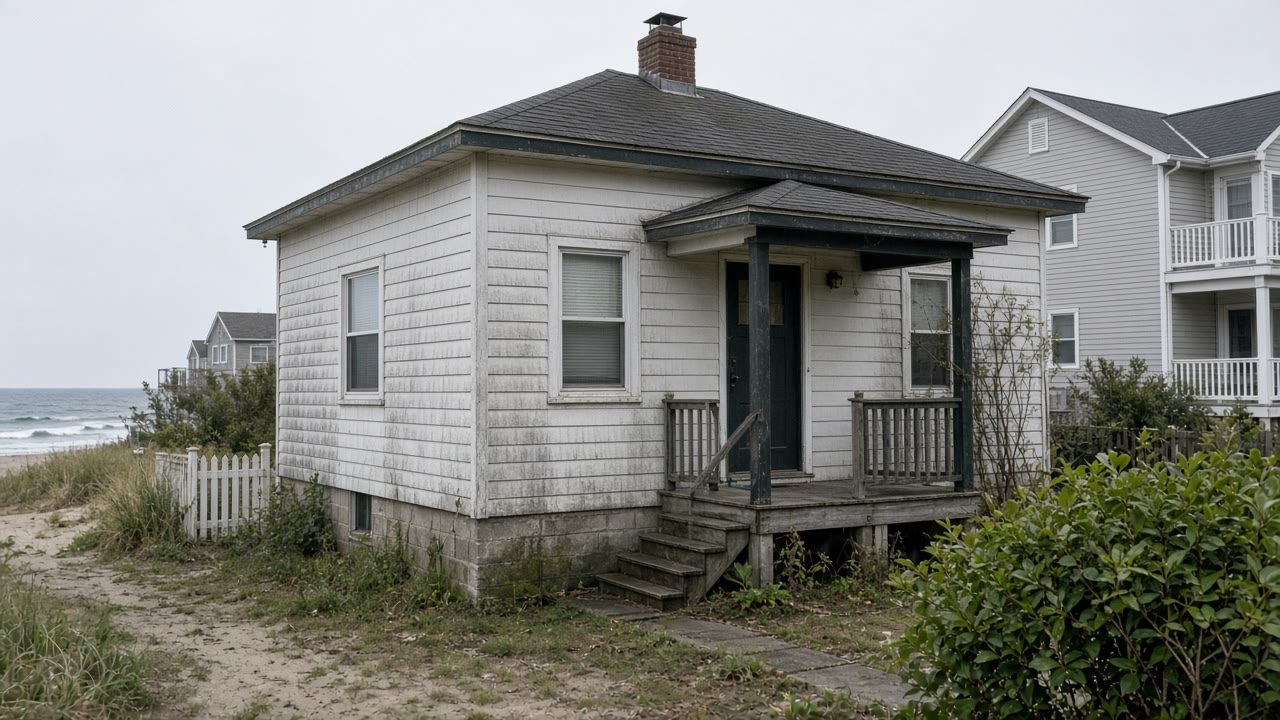
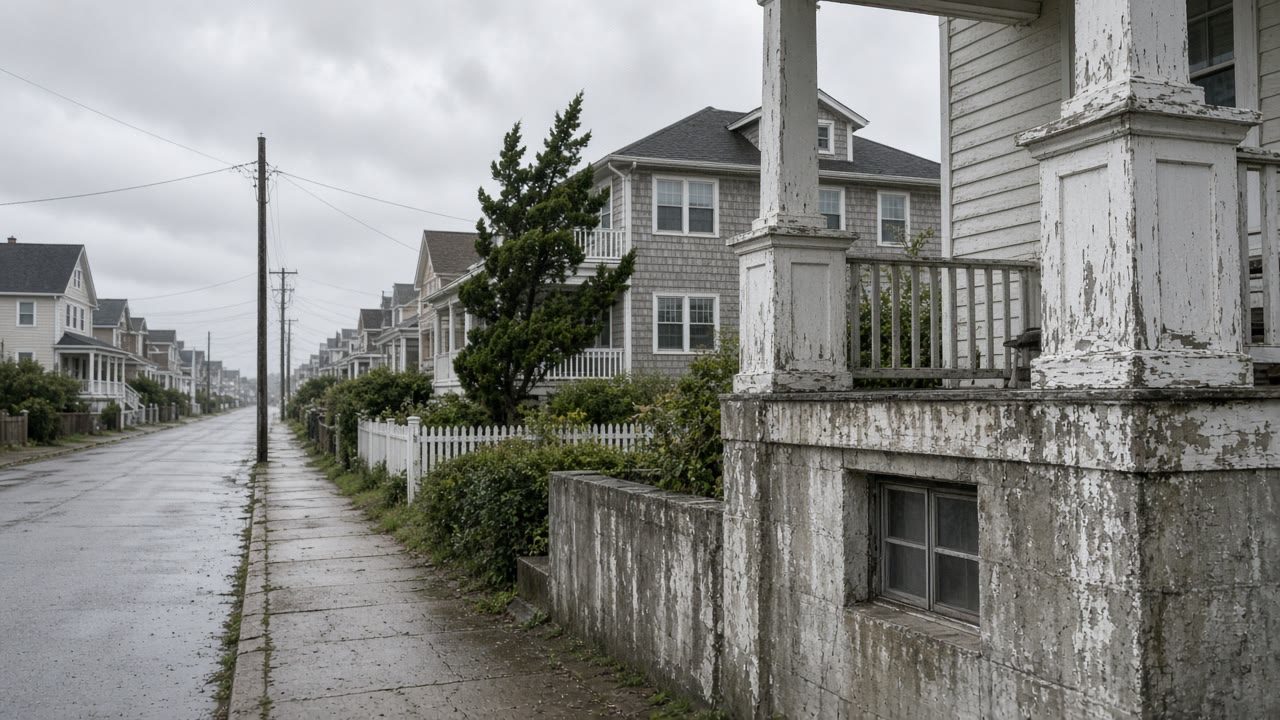
What mold removal looks like
When a removal is not the job, and what sits outside it
When you may not need this at all
- Under about ten square feet, roughly a 3 ft by 3 ft patch, the EPA says most homeowners can handle the cleanup themselves, and New York's mold licensing rules do not reach a project that size.
- A residential property owner working on their own property is exempt from the licensing requirement at any size. If you want to do it yourself, the state does not stop you.
- If nothing has started growing and the material is simply wet, drying is the job and removal is premature.
- If the growth is on stored boxes and insulation in a space the code requires to be open to the weather, the work may amount to clearing the space out and keeping it clear. No removal holds if the space is filled back up.
- If the affected material is all in common areas of a co-op, condo or larger rental building, the building may be the party that has to commission the work, and it may be entitled to use its own staff.
- Cleaning a stain off a hard surface is not remediation, and a company that wants to sell you containment for a bathroom ceiling patch is selling you the wrong thing.
What is out of scope
- Writing the scope, taking the samples or issuing the clearance. In New York the assessment is a separate license, held by a separate company with no shared ownership, on the same property.
- Repairs to the roof, plumbing, windows, siding, foundation or grading that admitted the water.
- Sealing, insulating or enclosing the openings under an elevated house, or converting that space into a dry room. Federal rules and the City's ordinance require it to stay open, and FEMA notes a compliant enclosure can be made non compliant by what is installed in it.
- Rebuilding and refinishing after the removal, including the City permit that work needs.
- Asbestos and lead paint abatement, which carry their own licensing.
- Contents restoration of furniture, documents and electronics.
- Any statement about health outcomes, and any decision about what an insurance policy covers.
Where we arrange licensed mold removal
- Mold Removal in Long Beach
- Mold Removal in Lido Beach
- Mold Removal in Point Lookout
- Mold Removal in Atlantic Beach
- Mold Removal in Island Park
- Mold Removal in Oceanside
- Mold Removal in East Rockaway
- Mold Removal in Baldwin
- Mold Removal in Freeport
- Mold Removal in Rockville Centre
- Mold Removal in Merrick
- Mold Removal in Valley Stream
Questions people ask about the removal itself
Can somebody just come and remove it without an inspection first?
Not lawfully, for a project over ten square feet. New York's Department of Labor states the law does not allow a licensed remediator to work on a project without an assessment from a licensed assessor, even where the property owner provides a waiver, and that cost estimates should not be given without one. Anyone offering to skip that step is offering to do the job in the wrong order.
Why is the crawl space job mostly emptying the space out?
Because the dampness is the design and the contents are the fault. The enclosure under an elevated house has to carry permanent openings so floodwater can enter and leave, FEMA limits the space to parking, access and low value storage, and it states plainly that insulation is not a flood resistant material. Once the insulation, the drywall and the stored material are gone, there is very little left in there for anything to grow on.
Is bleach not enough?
It changes the color and leaves the water behind. New York State Department of Health puts controlling the moisture first, requires the source of the water or dampness to be identified and corrected, and says porous material with extensive growth should be discarded. A stain you have treated on damp drywall is a stain you will see again.
How long does the containment stay up?
Until the independent assessor says the project passed. Nobody may dismantle containment before the remediation licensee has received that written notice, which is the mechanism that stops a crew grading its own homework.
Could the rebuild afterwards pull me into the flood code?
It can, and it is worth knowing before you agree a scope. Long Beach counts any reconstruction, rehabilitation, addition or other improvement costing fifty percent or more of the structure's pre-construction market value as a substantial improvement, which brings the whole structure up to current flood standards. The determination is made by the City.
Does a big NFIP claims history mean my house is a lost cause?
No, it means the water is a known quantity here. The City has 7,735 flood insurance policies and 8,440 paid claims since 1978. Houses on this island get wet and get dried and go on being houses. What makes a property a repeat problem is usually what is kept in the space that floods.
Say what needs to come out
Describe the space, the material and how far it goes. There is no obligation in asking, and no one is sent out to sell you anything.