
Mold Inspection or Removal First in New York?
In New York, assessment and remediation are usually separate licenses. When the law applies, inspection (assessment) comes first so remediation is scoped correctly.
Already know you need someone out? Call (315) 640-3590, answered 24/7.
Why New York splits the work
State labor law keeps the assessor from also performing the remediation on the same project in typical cases. That protects homeowners from a contractor marking its own homework.
When you still start with water mitigation
Emergency drying and water extraction can begin before mold licensing work. That is mitigation, not a substitute for assessment when mold licensing is required.
A clean sequence
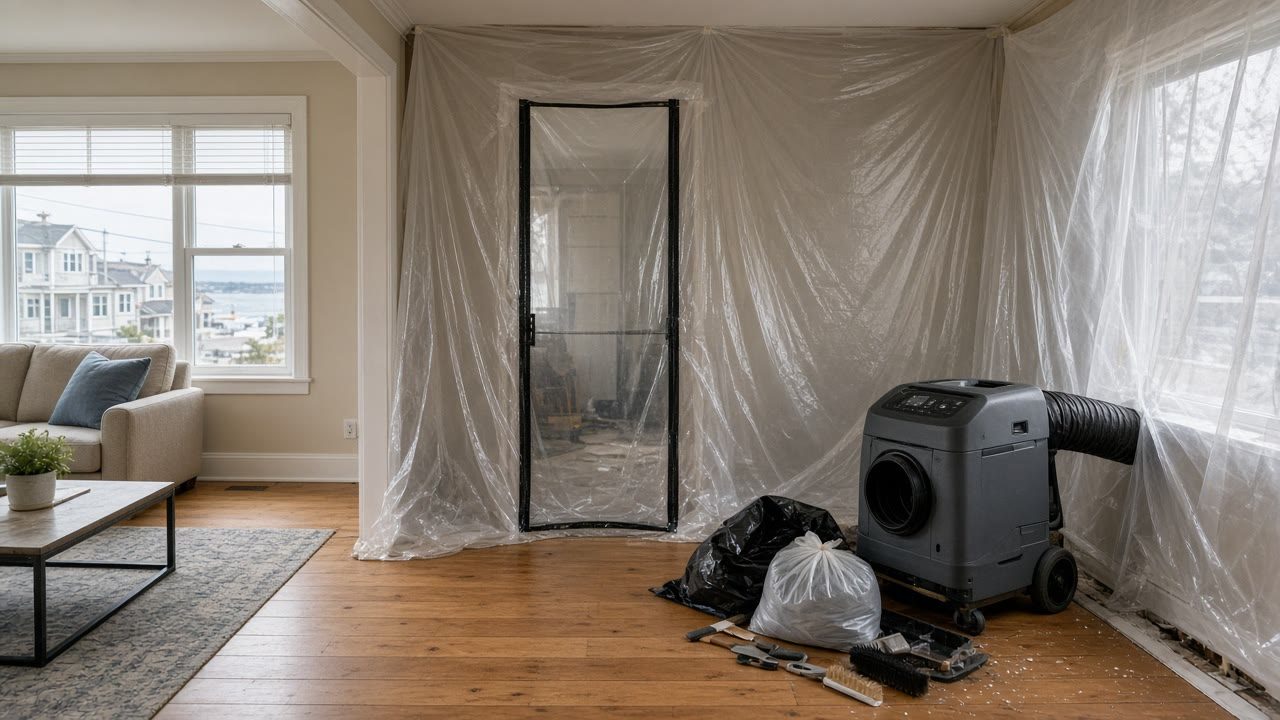
Stop active leaks if possible, dry what you can, get assessment when required, then hire remediation from the report. Clearance may follow larger jobs.
Sources used in this guide
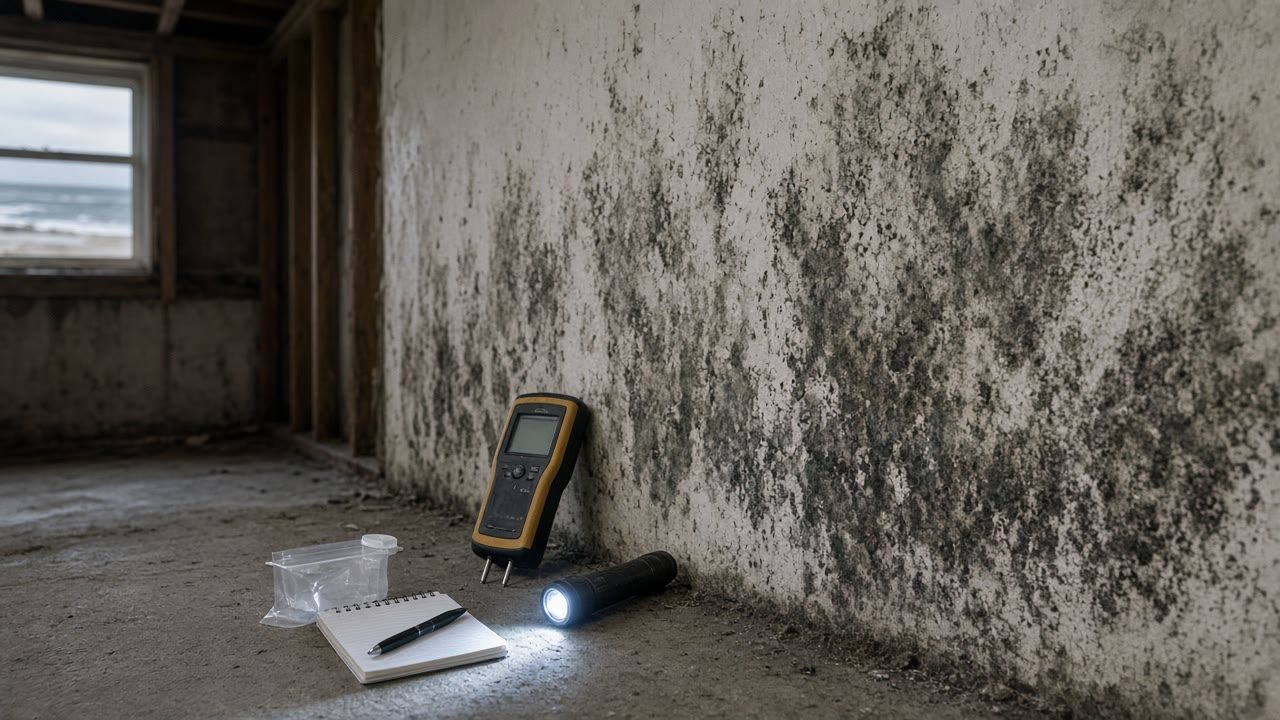
FEMA names the outcome directly: where water remains standing in a crawlspace after precipitation or a flood event, moisture damage to a building can be severe and the standing water creates significant health hazards including growth of bacteria, mold and fungus. FEMA recommends the space drain within 72 hours.
Source: FEMA, NFIP Technical Bulletin 11, November 2001, accessed 2026-09-14
Long Beach City Code Sec. 7-227(b) makes it unlawful to undertake any development in an area of special flood hazard without a valid floodplain development permit, and Sec. 7-225 defines development to include storage of equipment or materials. A violation carries a fine of up to $250 or fifteen days, each day of noncompliance is a separate offense, and a structure found non compliant without an approved variance is declared non compliant with notification sent to the Federal Emergency Management Agency.
Source: City of Long Beach Code of Ordinances, Sup. 87, accessed 2026-09-14
Services this guide relates to
Need someone to look at it?
Send the details and we will come back to you.