
Mold After a Flood or Nor’easter in Long Beach
Wet building materials can grow mold within days if they stay damp. After a Long Beach flood or surge event, drying and assessment timing matter as much as cleaning what you can see.
Already know you need someone out? Call (315) 640-3590, answered 24/7.
The first days
Remove standing water if it is safe, run air movement and dehumidification, and pull out saturated contents. The goal is to get materials dry before growth takes hold.
When inspection is the next call
If porous materials stayed wet, if you smell musty air, or if the flood was dirty water, a licensed New York mold assessment clarifies what must be removed versus cleaned.
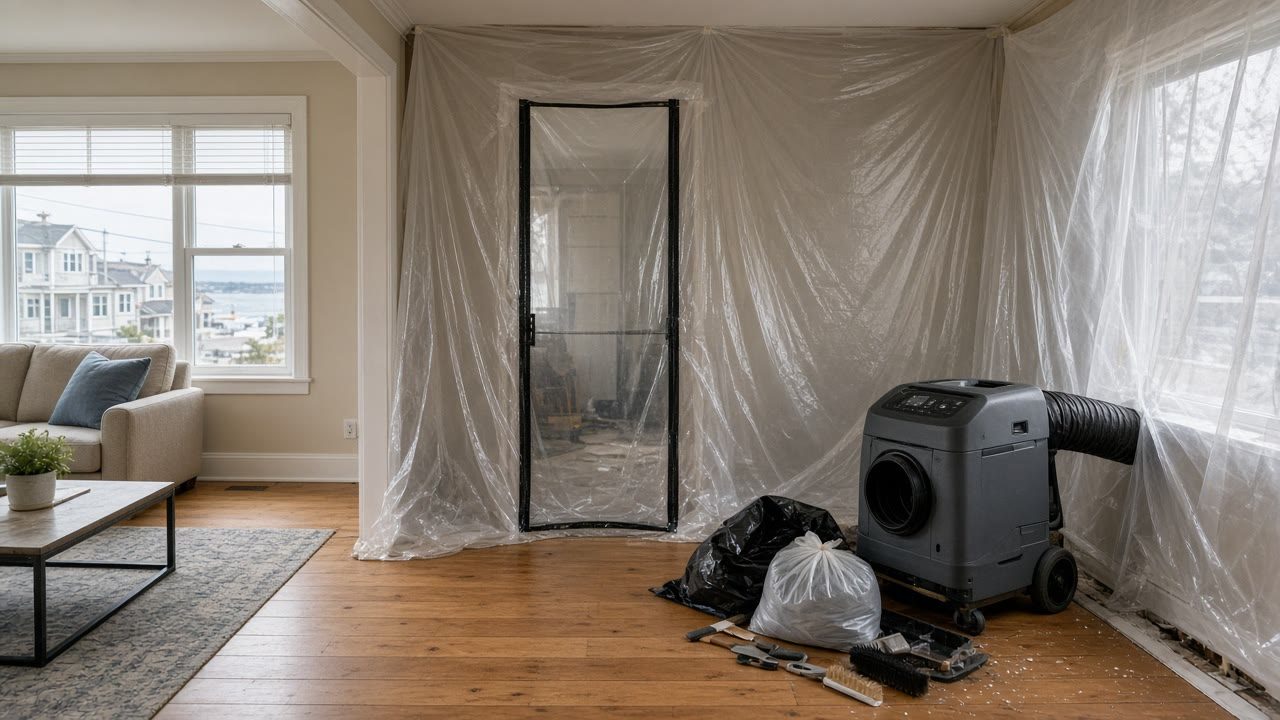
Remediation after assessment
New York generally keeps assessment and remediation in separate licenses. Use the assessment to scope remediation instead of guessing behind walls.
Sources used in this guide
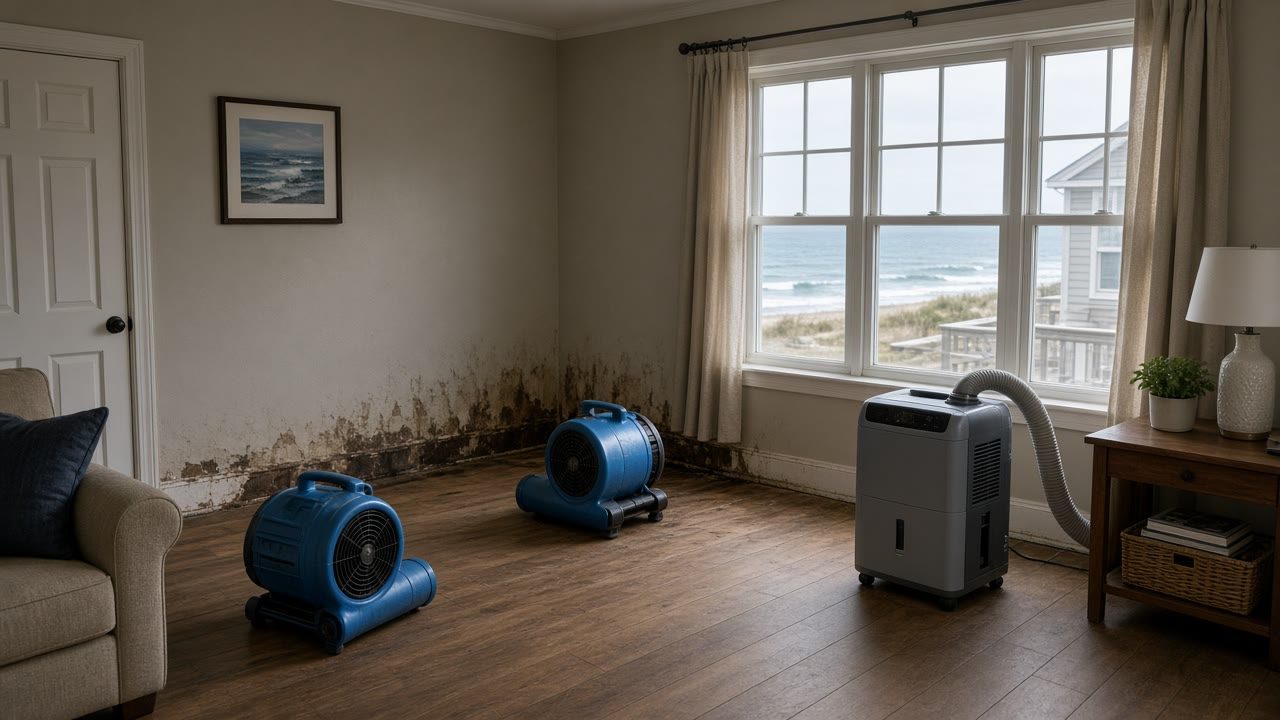
FEMA names the outcome directly: where water remains standing in a crawlspace after precipitation or a flood event, moisture damage to a building can be severe and the standing water creates significant health hazards including growth of bacteria, mold and fungus. FEMA recommends the space drain within 72 hours.
Source: FEMA, NFIP Technical Bulletin 11, November 2001, accessed 2026-09-14
Federal flood regulation at 44 CFR 60.3(c)(5), quoted in FEMA NFIP Technical Bulletin 1, requires that a fully enclosed area below the lowest floor of a new or substantially improved building be designed to let floodwater in and out on its own, with at least two openings totaling one square inch of net open area for every square foot of enclosed area, the bottom of each opening no higher than one foot above grade.
Source: FEMA, NFIP Technical Bulletin 1, March 2020, accessed 2026-09-14
Long Beach City Code Sec. 7-225 defines substantial improvement as any reconstruction, rehabilitation, addition or other improvement costing fifty percent or more of the market value of the structure before construction starts, and includes any structure that has incurred substantial damage regardless of the repair work actually performed. Two carve outs exist: correcting existing health, sanitary or safety code violations identified by the code enforcement official and minimum necessary for safe living conditions, and alterations to a historic structure that keep its designation.
Source: City of Long Beach Code of Ordinances, Sup. 87, accessed 2026-09-14
Services this guide relates to
Need someone to look at it?
Send the details and we will come back to you.